
Author: AlexSmith

Best prop firms for futures: How paper trading helps you pass evaluation challengesBest prop firms for futures: How paper trading helps you pass evaluation challenges

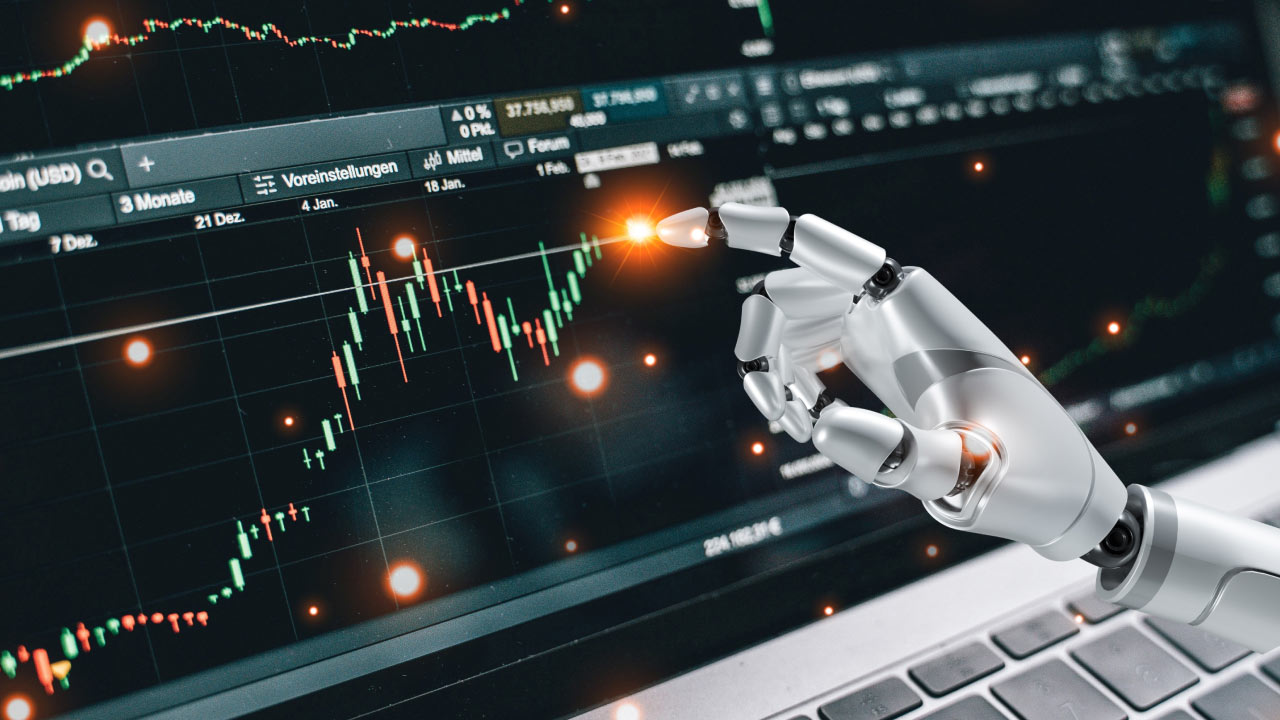
Benefits and Risks of Using AI in Trading: A robotic hand interacting with a forex trading chart on a computer screen, symbolizing AI-driven trading strategies.

A prop firm for futures in today's trading scenario is basically a place where a well-renowned trader usually gets access to a maximum amount of trading capital without risking his own money. It's simply because an intermediate would not allow anybody to touch their real funds unless they've passed those exceedingly difficult evaluations, which test the participant on discipline, consistency, and risk management. Most performers don't fail evaluations due to ineffective strategies but because they're sorely out of practice and without an ability to control emotions. This is where knowing what paper trading is becomes really necessary. Before joining the best prop firms for futures, one can master paper trading, which can potentiate the chances of best success.

What Is Paper Trading and Why Does It Matter? 

Perhaps the first thing you will need to know is what is paper trading to meet the requirements posed by prop firms. Paper trading involves placing imaginary trades under real market conditions and not dealing with money at all. With it, you could virtual-order, manage your positions, and try out strategies just like in your live account, all without putting any money at risk.

Paper trading was first coined when traders recorded their hypothetical trades on paper to track trades done against their performance. But today, advanced trading platforms like MetaTrader 5, NinjaTrader, and TradingView allow traders to use real-time paper trading that mirrors the exact conditions of live markets.

So what is really about paper trading? For example, it is not only about perfecting strategies, but developing the kind of strictness and consistency that would keep one sailing during the rocky times which markets are subject to. For those who are seeking funds from the best prop firms for futures, this experience could be a difference between passing and failing an evaluation.

Why the Best Prop Firms for Futures Value Paper Trading

To put things into perspective, the best prop firms for futures trade with the trader in considerable amounts of capital-grossly sometimes between $25,000 to over $200,000. So before they hand over access to any of these monies, they would like to see some action from traders with evaluations-simulated or live evaluations. The evaluations would test one's drawdown management, profit target achievements, and how well one follows the trading rules.

Why do many traders fail their first evaluation? The majority fails because of emotional issues: overtrading, revenge trading, breaking risk limits. A demo account helps eliminate some of these habits. Paper trading prepares you to deal with pressure, test your strategy, and follow a trading plan in conditions similar to a live account.

However, prop firms have proven to understand what traders go through in those realistic simulations and tend to be well disciplined and consistent. 

How Paper Trading Prepares You for Evaluation Challenges

1. Builds Confidence Without Risk:

Evaluation periods will always be fueled by great confidence in decision-making, and hands-on experience and learning how to execute orders will be through paper trading without losing a pound. Once mastered in your fake environment, it will feel more comfortable doing it under real conditions.

2. Gets You Familiar with Platform Mechanics:

You must be well versed on your trading platform before joining any of the best prop firms for futures. Paper trading assists in using stop-losses, limit orders, and trading multiple contracts, the whole range of simulated transactions. None of these mistakes will have any consequences here-but in a live account, they can prove costly.

3. Tests Your Risk Management Strategy:

Strict risk management is the primary requirement of all prop firm challenges. With paper trading, you can try different methods on your position sizing, leverage, and stop levels to see which ones are the most effective. That will enable you to comply with prop firm rules, for instance, daily loss limits and maximum drawdown restrictions.

4. Develops Emotional Discipline:

While offering no real money, paper trading helps students learn the emotional swings of the market. They are trained to keep calm after a losing trade and by understanding the impulse behind the behavior of most enthusiastic traders, why they are not careful after a winning streak-all of which are useful in passing evaluations.

5. Tracks and Improves Performance:

Most paper trading platforms analyze their own results and contain built-in tools to track performance. Reviewing one's statistics helps identify overtrading and poor risk-reward ratios. By analyzing continuously, one is improving one's approach before attempting to take the test evaluation in person.

Bridging Transitions between Paper Trading Party and Prop Firm Challenges

This is all the more because, after all those months of practice, one is supposed to feel next as natural moving from one paper account to a prop firm's evaluation. The same traits that the best prop firm for futures are looking for in their successful traders are the same that you will develop as you go through the process of paper trading-disciplined, consistent, and patient. 

However, while simulating account trading gets rid of money risks, it does not completely simulate the psychological pressure on a real account. It is important to understand the need to have real goals, following strict rules, and managing that virtual account as if it were your own capital. 

Advantages of Paper Trading Before a Prop Firm Evaluation

  • No financial risk while practicing real strategies.
  • Immediate feedback according to trade performances and trade execution.
  • Chance to fine-tune methods under real market conditions.
  • Better emotional control through practice, practice, practice.
  • Improved conception of platform tools and order management.

Final Thoughts 

Getting through an evaluation in one of those best prop firms for futures is an important milestone in every trader's career. However, that success will take time and requires discipline as well as a good strategy and preparation. That is why it is so significant to know about paper trading and to use it properly. 

Paper trading is not just an exercise for beginners; it develops a professional and cultivates the methods of testing up discipline for all possible cases and, finally, establishing an appropriate mental resilience for live trading under unfriendly conditions. Paper trading before joining a prop firm gives you the best possibility to pass the evaluation challenge-and in turn profitably trade once funded.
The psychology of relying on MT5 indicators in prop tradingThe psychology of relying on MT5 indicators in prop trading

What is AI Trading? All You Need to Know  Brimco

Trading is as much a mental challenge as a technical challenge. For prop traders, this psychological duel intensifies because they are trading with the capital of a firm and are under strict performance and risk rules. For anyone working with the best prop firm in the UK, decisions have weight: one wrong move translates into losing their funded account. Enter the MT5 indicators, acting not only as analytical tools but also as psychological anchors in the decision-making process of traders. 

Why Indicators Are Important for Traders

The MetaTrader 5 platform offers a vast range of technical indicators, everything from Moving Averages and RSI to Bollinger Bands and Ichimoku Clouds. For a large number of prop traders, these MT5 indicators act as a safety net to filter out the noise in the markets. This dependence, however, is subtly rooted not in actual technique but in psychology.

Reducing Uncertainty: Markets are unpredictable, and uncertainty instills fear. Indicators impose a sense of order, giving traders the feeling that they control their fate.

Confirmation Bias: Traders tend to employ their array of indicators just to substantiate what they already believe. A trader who thinks the market is bullish usually seeks the confirmation of that belief through indicator after indicator.

Emotional Buffer: A losing trade can then be blamed on the indicators, since a trader would much rather point the finger at the indicators than accept that the rational decision-making process he or she followed may have been flawed.

This safety net of sorts can be both very psychologically powerful and a two-edged sword.

The Comfort Trap of Over-Reliance

Judged on their utility across the process of decision-making, MT5 indicators can nevertheless become reasons behind the psychological pits into which traders fall.

1. Illusion of Certainty

A theoretical execution of prices over time, indicators are not claims against the future. But many traders subconsciously turn them into crystal balls. The illusion of certainty breeds excessive confidence among traders; thus, they easily fall into non-conformity with the risk rules set by the best prop firm in the UK.

2. Paralysis by Analysis

An array of indicators could elicit opposing signals, thereby causing traders to be overwhelmed. The result of this overload is inaction, resulting in missed trading opportunities, frustration, and impulse decisions.

3. The Dependency Cycle

Increasingly relying on indicators equates to decreasing faith in their own ability to read raw price action. Consequently, this secures the emergence of a dependency cycle that leaves them without direction when not able to use their tools. For the prop trader, this can imply paralysis in a fast-moving market when decisions need to be made swiftly.

Discipline at Prop Firms

The best prop firm in the UK aims to enforce discipline with rules such as maximum daily drawdown, overall loss limit, and consistency requirements. Thus, this is where psychology intersects with indicators:

  • Traders might rely heavily on indicators to avoid being out of compliance with the rules.
  • Should this become excessive, however, they can hamper traders by delaying their entry into trades or inducing unnecessary risk in positions on the occasions that the indicators “all agree.”

Ultimately, the firm wants traders who think independently and use MT5 indicators as tools and not crutches.  

Balancing Indicators and Trader Psychology

So, how do the successful prop traders strike the balance between using MT5 indicators and dealing with the psychological demands of trading?

1. Limit Indicators to Core Functions

Instead of using five or six similar tools, traders stick to a few complementary ones:

  • One trend indicator (like Moving Averages).
  • One momentum indicator (like RSI or MACD).
  • One volatility indicator (like ATR). 

This prevents information overload and keeps decisions clear.

2. Trusting Price Action

Price action tells the most direct story of the market. Indicators should validate what the trader sees on the chart rather than dictate every decision. Building confidence in interpreting price moves reduces psychological dependence.

3. Journaling Trades

A journal will help traders become conscious of recognition, about when their reliance on indicators comes from discipline and when it comes from fear. For instance, did they use RSI to validate a valid setup, or did they add it just to feel "safer" about the trade? 

4. Managing Emotions

Recognizing feelings like fear of loss and greed is paramount. The traders' excessive reliance on indicators usually comes from trying to suppress these emotions. Once they acknowledge these emotions, the need to hide behind technical tools would also diminish.

Example: A Prop Trader’s Dilemma

Imagine a trader at the best prop firm in the UK looking at GBP/USD. Price breaks above resistance into bullish territory. The trader turns to MT5 indicators:

  • Moving Averages confirm an uptrend.
  • RSI is approaching overbought.
  • MACD shows bullish momentum.
  • Bollinger Bands suggest high volatility.


Instead of jumping into the trade, the trader hesitates, waiting for a clean sweep of different signals. By that time, the trade becomes exhausted, and they face a losing one. Psychologically, the trader was looking solely for confirmation from the indicators and did not feel like trusting the price action and the plan.

Conclusion

The psychology of reliance on MT5 indicators in prop trading makes the fine line between self-confidence and dependency. Indicators have their importance, but they are tools; they do not take care of emotional baggage like fear, doubt, or greed. 

Success for a trader at the best prop firm in UK depends on mastering both the technical and psychological skills of trading. This includes disciplined use of MT5 indicators while building an awareness of their own emotions and reliance on price action. 

Ultimately, the best prop traders are those who understand the difference between trusting their tools and trusting themselves.